
Beyond CRI: What Really Makes Food Look Good Under Grocery Store Lighting
Beyond CRI: What Really Makes Food Look Good Under Grocery Store Lighting
If you've done any research into grocery store lighting, you've probably encountered CRI: Color Rendering Index. It's the most commonly cited measure of light quality, and for good reason. A fixture with a CRI of 90 or above will render colors more accurately than one rated at 80. For a grocery store, where the appearance of fresh produce, meat, and seafood directly influences purchasing decisions, that matters.
But here's what many lighting conversations leave out: CRI alone is not enough. Two fixtures can share identical CRI ratings, identical color temperatures, and identical wattages and look completely different on your products. Understanding why is the difference between a store that looks good and one that makes customers reach for their wallet.
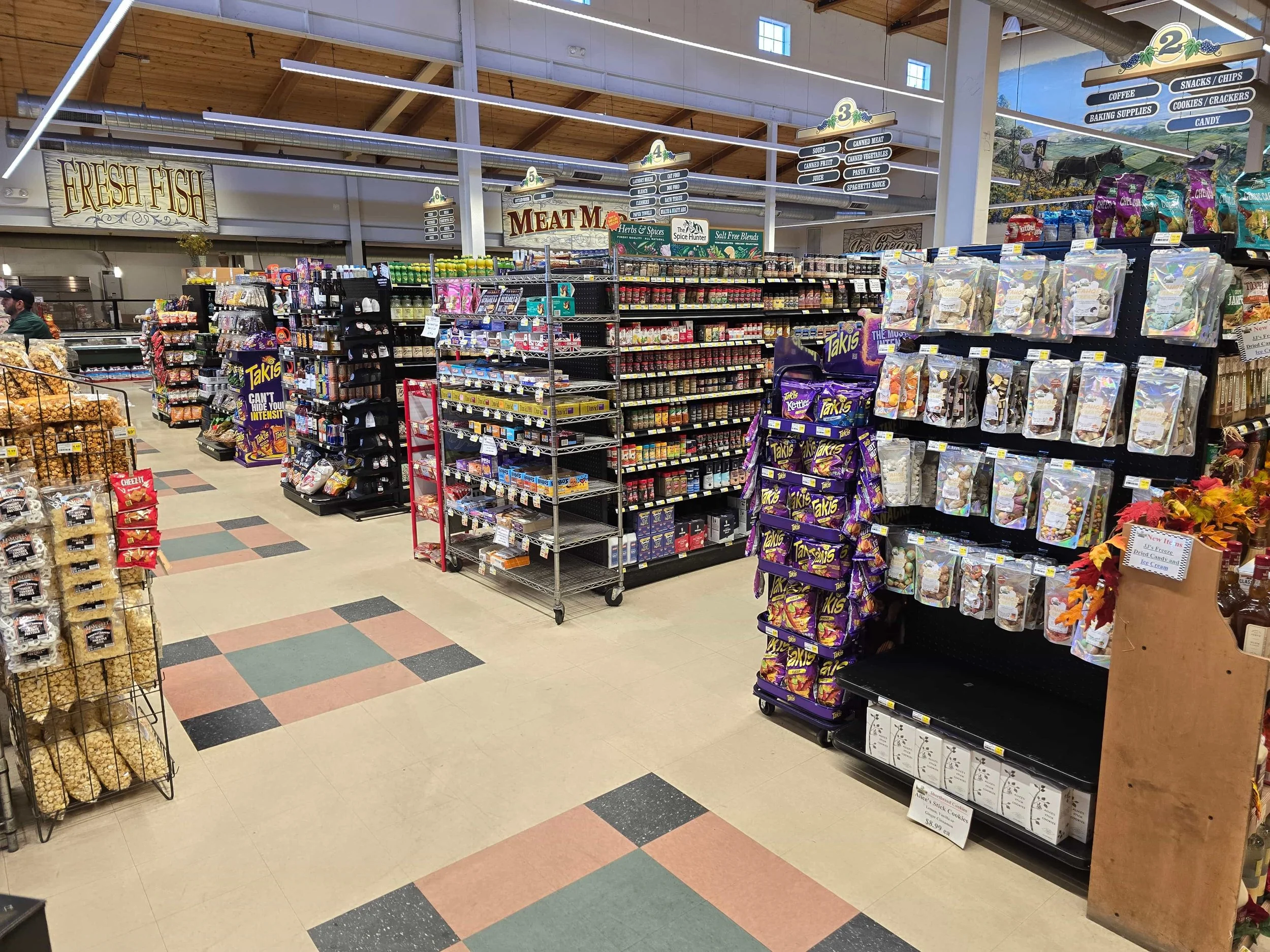
Aisles with high Color quality and low glare
The Limits of CRI
CRI is calculated as an average across eight color samples. It's a useful starting point, but averages hide a lot. A fixture can score well on those eight samples while still rendering certain colors poorly, particularly reds.
That's where R9 comes in. R9 is a separate measurement that specifically evaluates how a light source renders saturated red tones. It doesn't factor into the standard CRI score, but for a grocery store it may be the single most important number on a spec sheet. Red bell peppers, tomatoes, strawberries, fresh-cut beef, salmon — these are the products that drive impulse purchases, and they all depend heavily on red rendering. A fixture with a high CRI but a low R9 will leave those products looking flat and unappetizing. A fixture with strong R9 performance makes them pop. Thankfully, more fixture manufacturers are including R9 on their specification sheets than they were even five years ago.
TM-30 takes things a step further. Where CRI evaluates color rendering across a limited set of samples, TM-30 uses 99 color samples and provides two separate scores: one for fidelity (how accurately colors are rendered) and one for gamut (whether colors appear slightly more vivid or slightly more muted than natural). Together, TM-30 and R9 give a much more complete picture of how a light source will actually perform on real products than CRI alone.
What the Spec Sheet Doesn't Tell You
Two additional metrics that significantly impact light quality are rarely printed on a spec sheet at all.
Duv describes where a light source falls relative to natural, balanced light. Think of it like the tint control on an older television. The color temperature could be set perfectly, but if the tint was off the picture had either a greenish or pinkish cast. LED fixtures work the same way. Cheaper manufacturers tend to target the green side of the curve because green-shifted LEDs are more efficient, which lowers production cost. The difference is subtle but it affects the overall feel of a store in a way that's hard to articulate and easy to sense. A neutral to slightly warm Duv creates an environment that feels natural and inviting.
Flicker is the other metric that rarely appears on spec sheets. All light sources flicker to some degree, but cheaper LED drivers can produce flicker at levels that, while not always consciously visible, create subtle problems for shoppers. Research has found that people with migraine developed headaches following exposure to flicker patterns commonly found in architectural lighting at a rate of 41%, compared to just 8% in control individuals. Flickering and pulsing lights are established triggers for migraine attacks (Flickersense), and the last thing a store owner wants is customers cutting their visit short because the environment is making them uncomfortable without knowing why (National Headache Foundation). Because Duv and flicker data are rarely published, we regularly request fixture samples to test in-house before making recommendations.
It's Not Just the Light Source — It's the Optics
Even a fixture with excellent color metrics can underperform if its optical design is poor. This is where the difference between a purpose-built grocery fixture and a general commercial fixture becomes very apparent.
Many track fixtures, even from well-regarded brands, are designed with inexpensive optical components that produce an uneven beam. The result is a hotspot at the center of a display with a sharp dropoff toward the edges. Rather than creating attractive contrast between the display and the surrounding space, the fixture creates harsh contrast within the display itself. It's not a pleasing look, and it works against the very goal lighting is supposed to achieve. A well-designed fixture, properly aimed, creates an even wash across the entire display face. The contrast between the display and the open aisle then does the job of drawing the customer's eye.
The same principle applies to aisle lighting. Inexpensive aisle fixtures tend to have poor color quality and broad, unfocused optics that light the space rather than the product. Better fixtures are available with strong color quality and shaped beam patterns specifically designed to direct light toward the products on the shelves rather than spilling it across the floor. The difference in how merchandise looks under the two approaches is significant, and it compounds across every aisle in the store.
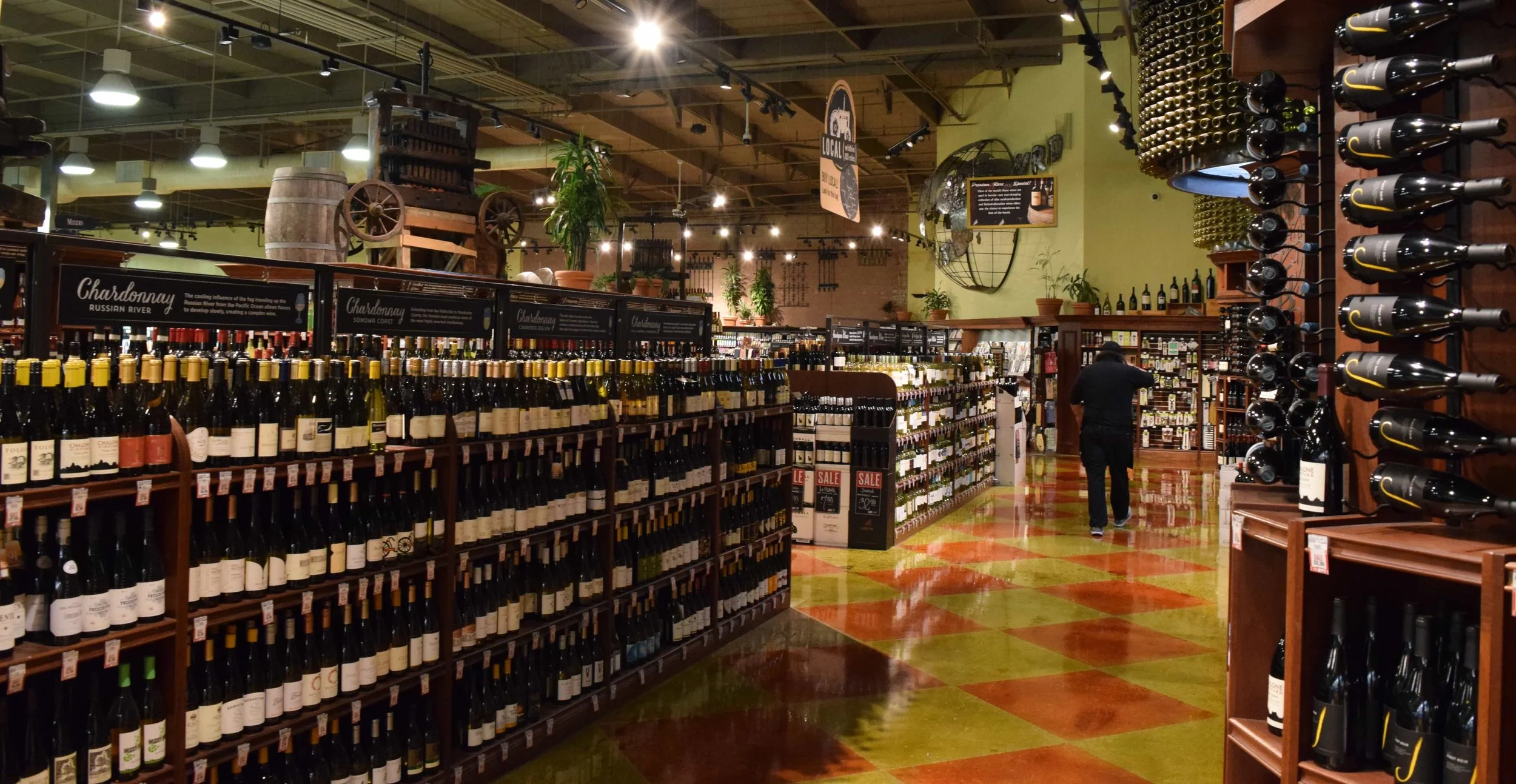
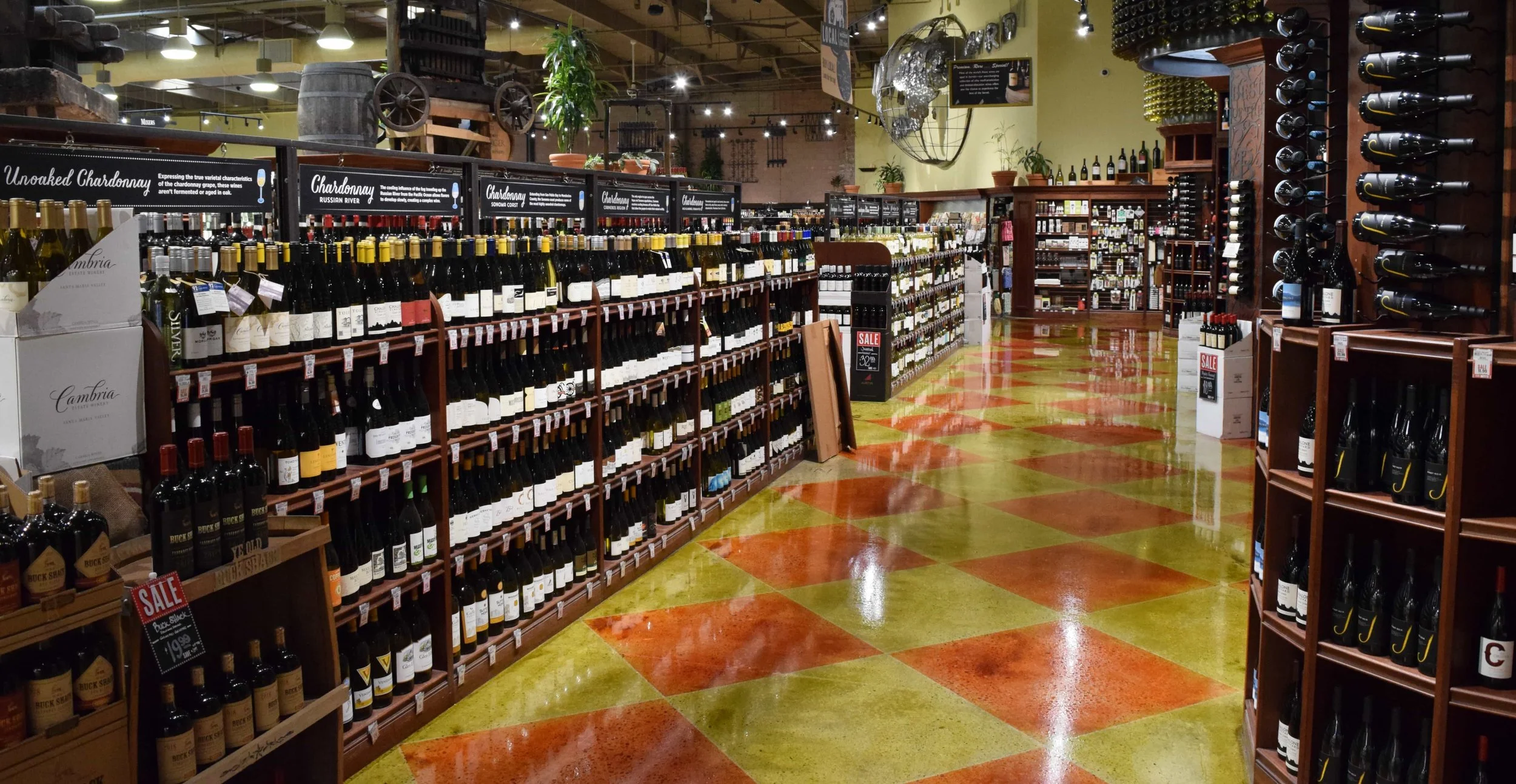
Drag the handle left or right to compare.
How We Evaluate Fixtures
Fixture selection at JLH Lighting starts with specification compliance and manufacturer reputation. From there we look at the full picture: CRI, R9, TM-30, color temperature, Duv, flicker, optical design, and cost. When the data we need isn't available from the manufacturer, we request samples and test them ourselves before recommending anything to a client.
Some of the fixtures we work with were designed specifically for grocery and food retail applications, built from the ground up with color quality and display performance as the primary design criteria rather than an afterthought. That level of intentionality shows up in the results.
The bottom line is this: a specification sheet is a starting point, not a guarantee. The stores that look genuinely exceptional are the ones where every fixture was chosen because it performs, not just because it passes.
What This Means for Your Store
You don't need to become a lighting engineer to make good decisions about your store's fixtures. That's what we're here for. But understanding that light quality goes well beyond a single number on a spec sheet helps explain why two stores with the same color temperature and the same CRI rating can feel completely different the moment you walk through the door.
If you're planning a new store, a remodel, or evaluating your current lighting, we're happy to walk you through what we look for and why.
Tags: Grocery Lighting, LED Lighting Quality, CRI, R9, TM-30, Grocery Store Design, Supermarket Lighting, Food Retail Lighting, Lighting Design