
The First 10 Seconds: How Grocery Store Lighting Sets the Tone for the Entire Shopping Experience
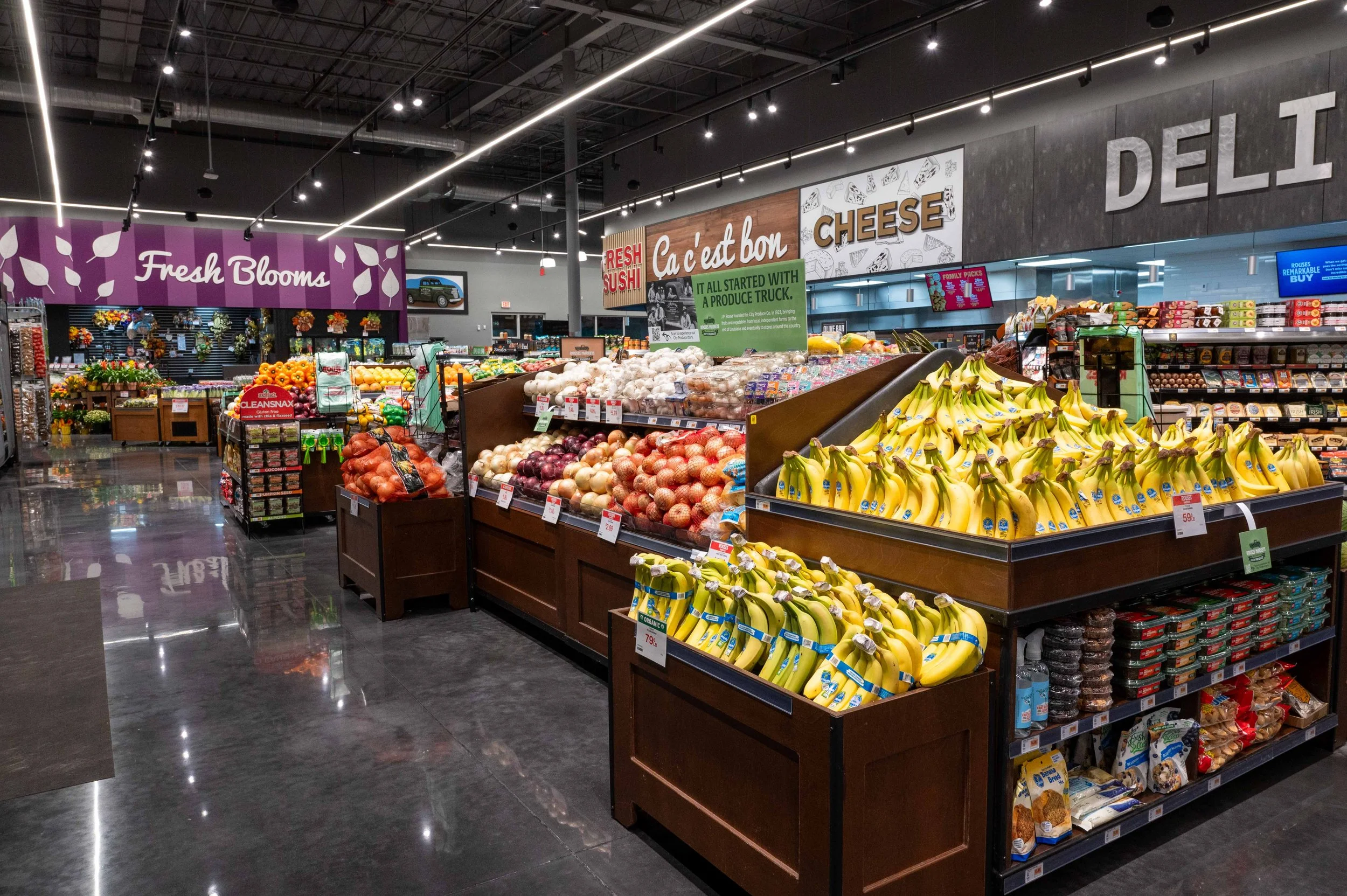
Walk into any grocery store and within moments, before you've found the produce section, before you've checked a single price, you've already formed an impression. Is this somewhere you want to shop? Does the food here look good?
You probably don't consciously register any of this. But the store's lighting already made the decision for you.
The Decompression Zone: Where First Impressions Are Made
Those first 10 to 15 seconds inside a store are critical. Most shoppers, especially first-timers, instinctively pause to get their bearings. They scan for signage, take in the layout, and orient themselves. While their conscious mind is looking for the bread aisle, their subconscious mind is absorbing something else entirely: the feel of the place.
Is it bright and cold, efficient, no-frills, get in and get out? Or is it warm, layered, and inviting, a place that feels like the food matters? That impression is set almost entirely by light.
This is why at JLH Lighting, the very first conversation with a new client centers on one question: What do you want your customer to feel when they walk through that door?
Not Every Store Should Feel the Same — And That's the Point
There's a wide spectrum between a bare-bones value store and a high-end boutique grocer, and most grocery retailers fall somewhere in the middle. Our clients tend to range from the budget tier all the way up to premium full-service stores, grocers like Nugget Markets in California, Rouses Market on the Gulf Coast, and Clark's Markets in Colorado, which represents the upper end of what a full-service grocery store can feel like.
Each of these stores has a distinct identity, and their lighting reflects that intentionally.
A budget tier store wants to feel clean, bright, and approachable, reliable and honest. A higher-end store like Clark's wants to feel premium without feeling pretentious. Warm without being dim. Inviting without losing the sense of a well-stocked, full-service market.
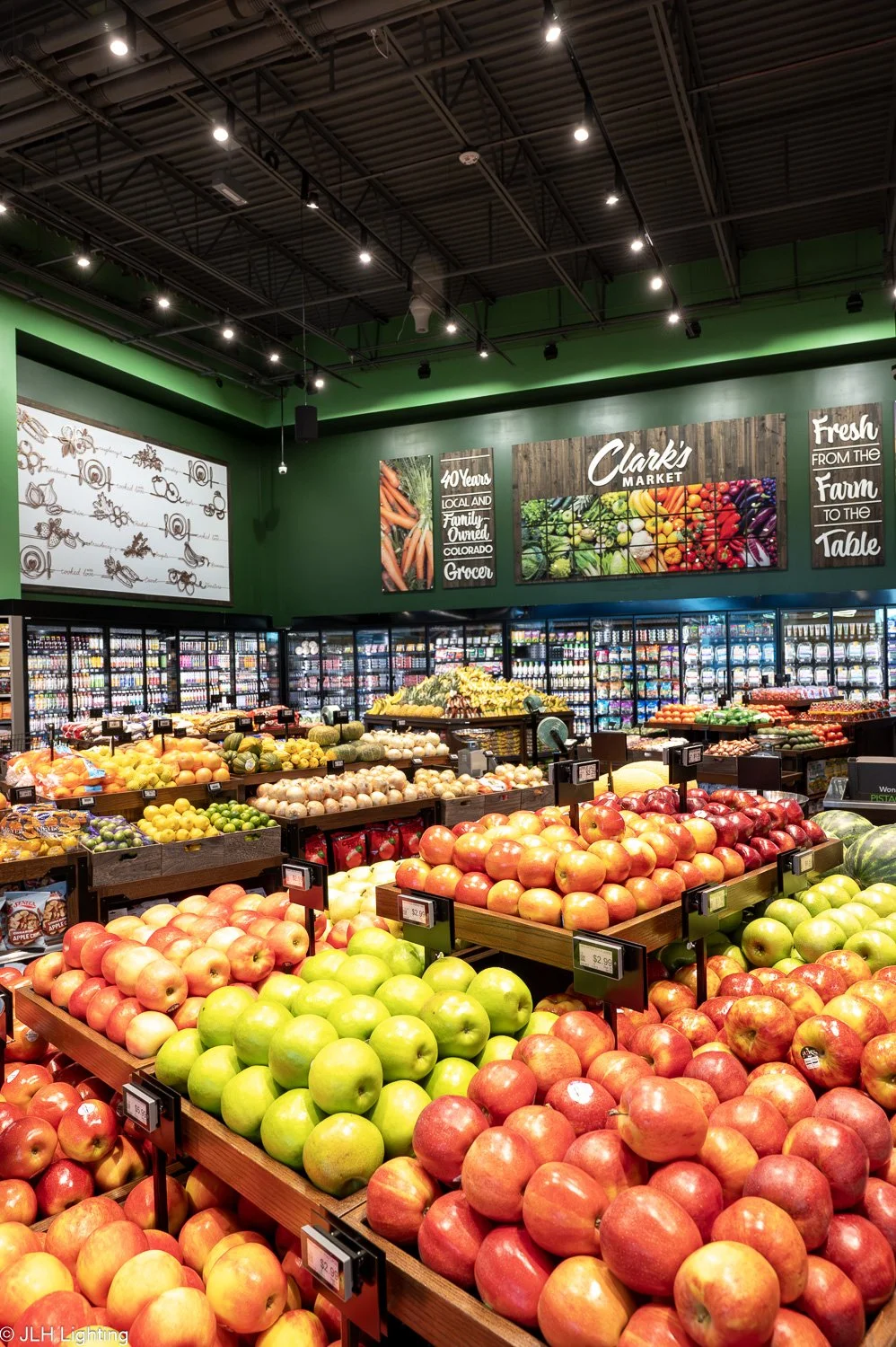
Getting that balance right is not an accident. It's a design decision made before a single fixture is specified.
What Actually Creates "Feel": Light Levels, Contrast, and Quality
Three variables determine how a store feels from a lighting standpoint.
Light levels set the baseline energy of the space. Higher overall light levels read as active and efficient. Slightly lower ambient levels, balanced with brighter accent lighting on products, read as more curated and upscale.
Contrast ratios are what separate a flat, uninspiring store from one where the products genuinely pop. Budget lighting approaches use as few fixtures as possible, relying on general-purpose fixtures to cover the whole space. You can still achieve high-quality light this way, but you lose the ability to create contrast, to make a produce display or a deli case look dramatically better than the aisle floor in front of it. Higher-end lighting design uses multiple layers and specialized optics: ambient light to set the tone, and targeted accent or display lighting to draw the customer's eye directly to the merchandise.
Light quality is where things get more nuanced, and where the difference between a good fixture and a great one becomes apparent. Color temperature and CRI are the metrics most people have heard of, and they matter. But they're just the beginning. There are additional technical measurements that separate fixtures that make food look genuinely appetizing from fixtures that merely illuminate it. We'll dig into those in a future article, but the short version is this: not all 90+ CRI fixtures are created equal, and the difference shows up directly on your products.
Glare, Layers, and the Premium Feel
One of the clearest markers of a well-designed, higher-end store is the absence of glare. Glare is uncomfortable, it's unflattering to products, and it makes a space feel cheap even when it isn't.
Reducing glare requires layering. When you have multiple light sources working together, ambient, accent, case lighting, decorative, no single source needs to work so hard that it becomes harsh. The result is a space that feels bright and well-lit, but not clinical. A space where the customer's eye naturally goes to the product, not to a blazing troffer or highbay overhead.
This is the environment we aim to create for every client: lighting that makes what the store is selling look its absolute best, while wrapping the customer in an atmosphere that matches the store owner's vision.
The Takeaway for Grocery Retailers
If you're planning a new store, a remodel, or a retrofit, lighting decisions should happen early, ideally in the first design conversation, alongside your floor plan. The fixtures you choose and how they're arranged will determine not just how your store looks on opening day, but how your customers feel every single time they walk through the door.
At JLH Lighting, we start every project by understanding the experience you want to create. Then we build the lighting plan around that vision, from the first 10 seconds all the way to the back cooler doors.
Ready to talk about your store? Contact us today.